Building a complete identity around Brighton’s Royal Albion Hotel project
A high-profile seafront restoration called for more than a logo. Seafront created a coherent public identity across the construction site, print, web and search — then continued the relationship into practical AI and workflow improvement.
Explore the project ↓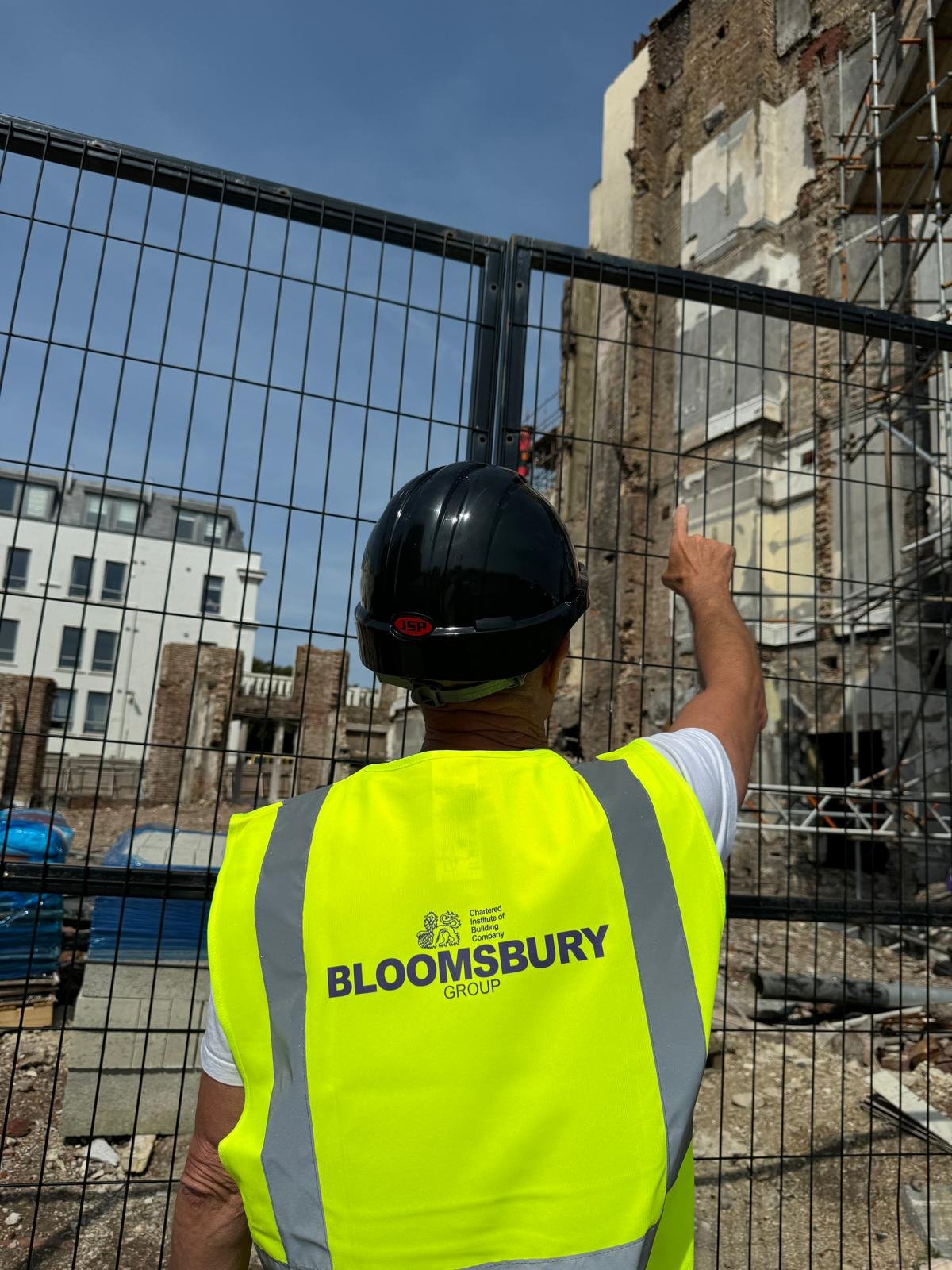
A sensitive landmark project with a very public audience
The Bloomsbury Group appointed Seafront to shape the marketing and branding for its refurbishment and partial rebuild of the Royal Albion Hotel, an iconic building on Brighton’s seafront. The assignment sat within a client relationship developed over more than 15 years, giving the team a strong understanding of Bloomsbury’s construction expertise, working style and reputation.
The project needed to respect the building’s history while presenting a clear, confident vision for its future. Communication also had to work for several audiences at once: residents and visitors watching the site develop, stakeholders following progress, potential commercial partners, and people looking for evidence that Bloomsbury could manage sensitive restoration work at scale.
“The challenge was to turn a live construction project into a recognisable, credible story — from the boundary of the site to the search results.”
A visual system that connected heritage with progress
Seafront designed a bespoke project identity inspired by the Royal Albion Hotel’s architectural character and expressed through a clean contemporary treatment. The idea was simple: acknowledge the history people cared about while making it clear that the project was moving forward.
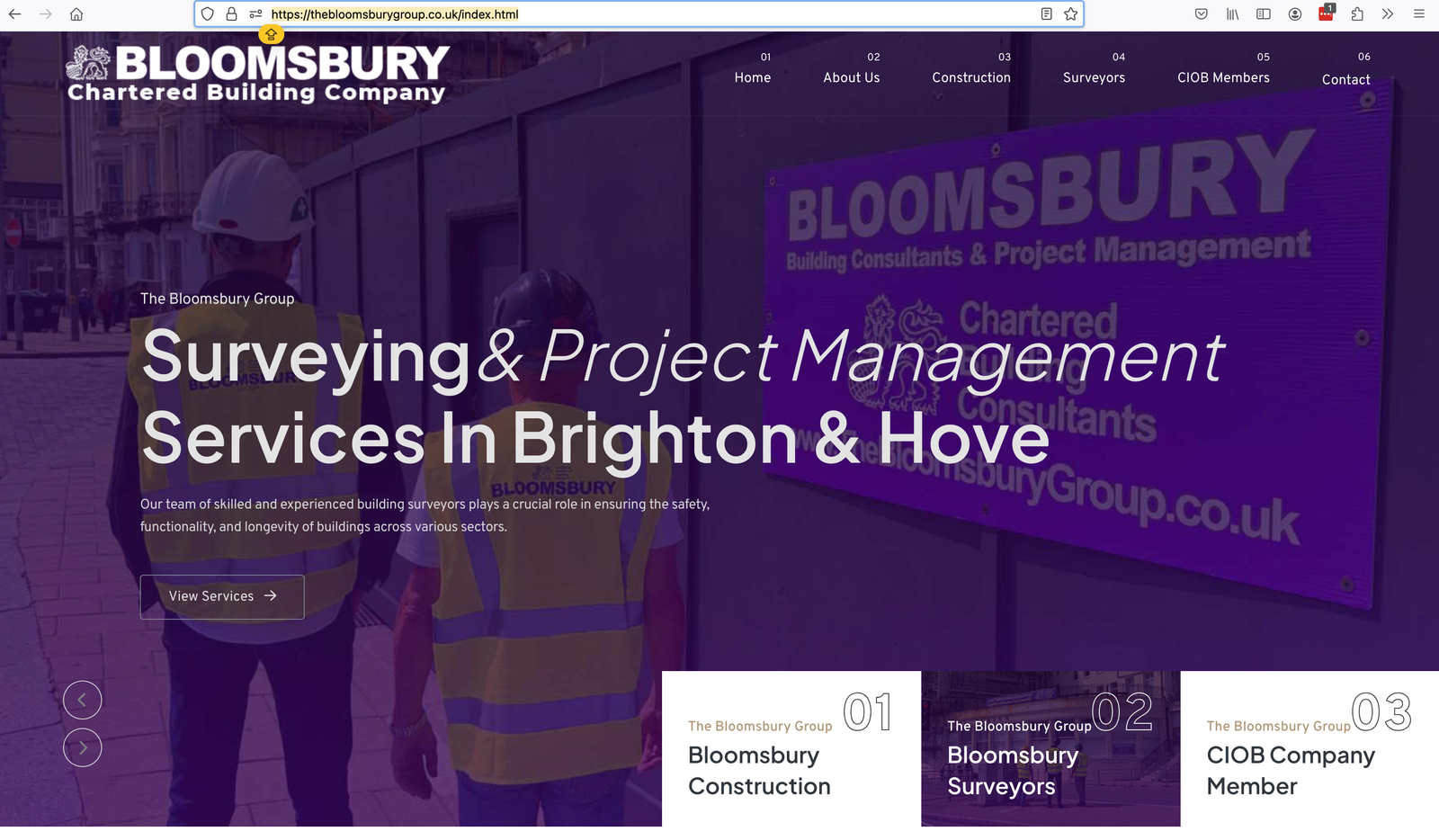
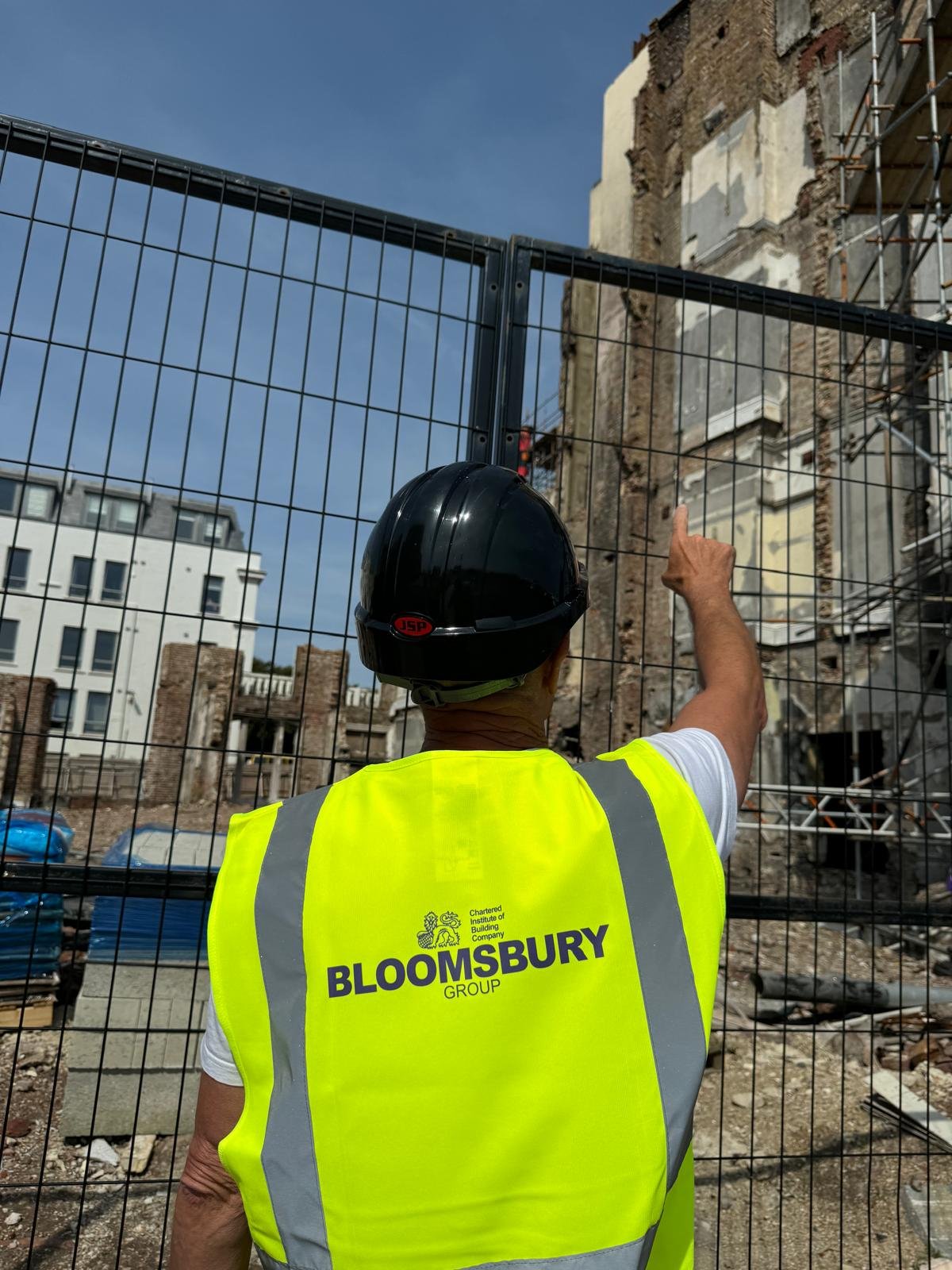
That identity was applied to construction-site signage and large-format hoardings. The hoardings combined project information, historical context, progress material and visualisations of the completed hotel, turning a necessary site boundary into a useful public communication surface. It helped the project feel considered and legible rather than hidden behind anonymous works.
A coordinated stationery suite — including letterheads, business cards and compliment slips — carried the project identity into direct communication while remaining compatible with The Bloomsbury Group’s established corporate brand. Across every touchpoint, the goal was consistency: the same project, presented with the same level of care.
A dedicated digital home for progress, history and enquiries
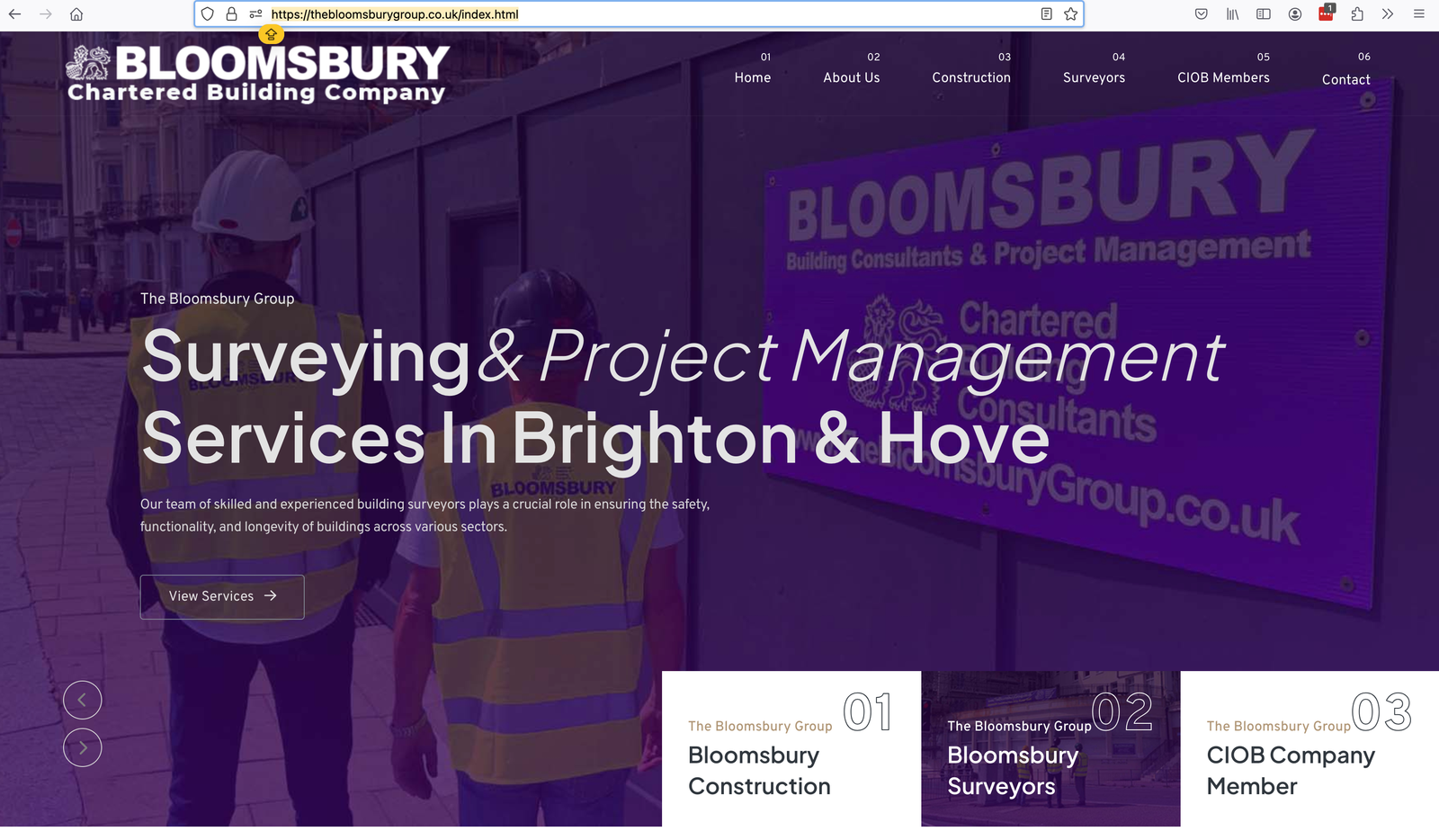
The project website brought together regular construction updates, key milestones, the hotel’s history, Bloomsbury’s restoration approach, progress photography, architectural imagery and contact information. Linking the experience with the group’s main website helped visitors move between the landmark project and the wider company story.
Search work focused on the local and topical relevance of the project: Brighton seafront development, heritage restoration and the specific expertise involved in complex refurbishment. Rather than treating SEO as a list of phrases, the content made those themes useful to the people actively looking for information. The result was a visible, accessible reference point for a project attracting strong public interest.
The site and on-location materials reinforced each other. Someone encountering the hoardings could continue the story online; a visitor finding an update in search could understand who was delivering the work and why the approach mattered. That continuity is what turns separate marketing assets into a communication system.
Extending the relationship into AI and workflow automation
The relationship has continued beyond the original Royal Albion branding programme into digital improvement, including AI automation and workflow support. This work is approached in the same way as the public-facing project: start with the real task, understand who owns it, and introduce technology only where it makes the process clearer or more dependable.
Work in this area includes identifying repeatable administrative steps, mapping how information moves, exploring safe AI assistance for research and content preparation, and shaping workflows that reduce avoidable manual handling. Depending on the process, that can involve Microsoft 365, Power Automate, Copilot or a more tailored AI solution, with human review kept where judgement and accountability matter.
Detailed internal workflows and client data are deliberately not published here. The important point is the continuity of the method: brand, website and automation are not treated as unrelated purchases. They are parts of the same operating picture, designed around accurate information, clear ownership and a better experience for the people using them.
A coherent project presence, built on a long-term partnership
The completed programme gave the Royal Albion project a consistent identity across physical and digital channels. The original project reporting records increased public engagement, a stronger presentation of Bloomsbury’s restoration expertise, clearer stakeholder communication, commercial interest and positive media attention. We have not added unsupported traffic, lead or efficiency figures to this case study.
More broadly, the project demonstrates the value of continuity. A long-term partner can understand the history behind a brand, respond quickly to a high-profile opportunity and help later improvements fit the organisation rather than sit beside it. For The Bloomsbury Group, that has meant support spanning identity, signage, print, website, SEO and the next generation of AI-enabled workflows.
If your organisation has a public project, an operational bottleneck or both, Seafront IT Solutions can help connect the story customers see with the systems your team relies on.
Talk about your project ↗